Making Some Noise with Micromovements and Video
Great content, especially video, can help retailers introduce new products and show shoppers how to use them. A good launch plan gives each video a purpose: announce an arrival date, help someone choose what to buy, or show why a product might be right for them. A micromovement, a short animation that adds subtle motion to a still image, can do the same.
Before creating content, we start with the “who,” “what,” and “why.” Who are the customers? What do they need? Why would these products appeal to them? Those answers help shape the story and the action that leads customers to the products.
An AI video content strategy also needs a timeline. Plan what to reveal before the products arrive, what to show when they become available, and how to keep the conversation going. This applies to retail launches and wholesale collection introductions, with different timing and messages for each audience.
Give your product launch a story worth watching
It’s good practice to start with a situation your customers will recognize.
- A home décor store could introduce candles in a living room setting.
- A fashion boutique could show pieces worn together.
- A specialty shop could dress up its front window with a few products presented as a coordinated gift idea.
These stories help shoppers picture using the products. AI can help turn a single catalog shot into a warm setting or add movement to an image to draw attention to a detail.
Show shoppers what is new
Give shoppers a reason to look further. A close view of a finish, a pattern, or the way pieces coordinate can help see the artistry and help them decide to buy.
But AI can be tricky if you aren’t careful. Details, shapes, and colors can change during production. Compare the finished visuals with approved product images, and check labels and features too. If a video demonstrates how something works, make sure it reflects the actual product. Experience with these tools matters when the details influence a purchase.
Show how the collection works together
When introducing a collection, help shoppers see how the pieces relate to one another and how they can make the look their own.
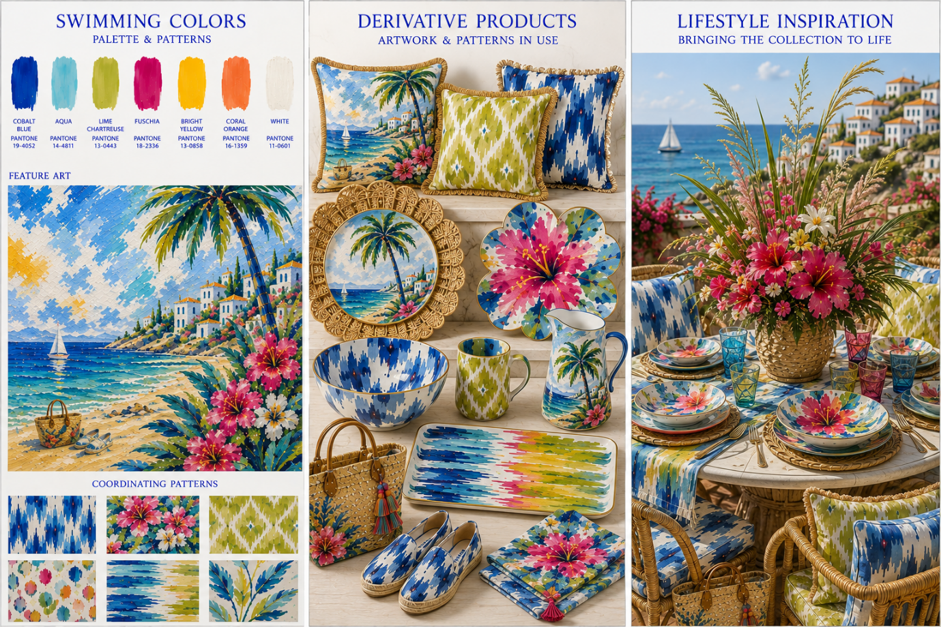
When we developed the coastal program for a retail partner, we used mix and match patterns, unique details, and color stories that tied back to the artwork. Coordinating patterns derived from the art carried through to pillows, tableware, and other product ideas. That continuity gave the collection a recognizable look, while the variety left room for customers to add their own touches to decorating and gifting.
Pro tip: Not every piece needs to use the exact same artwork. Coordinating patterns give customers more ways to mix pieces and make the collection feel personal.
Create lifestyle scenes that are aspirational. Our approach on the coastal line was to make customers feel the emotion of being there. They might not be able to get to the beach, but showing the pieces around an outdoor table helps them imagine themselves there. It gives the collection a fun setting and helps shoppers picture how they might use the products in their own homes.
A launch video or micromovement can move from the artwork to products and their details, then show how the pieces come together in a lifestyle setting. Choose a main product to feature so viewers have a clear place to focus. End with the collection name and where customers can find it.
Pro tip: Include different price points so shoppers have options, whether they want one small gift or several pieces for their home.
Coastal collection board by Imagination Network, from artwork and coordinating patterns to product visualizations and a lifestyle setting.
A board like this can guide visuals for a website, catalog, sales materials, and digital content, keeping the collection connected across the launch.
Turn one video into several pieces of content
One video can support several messages over a launch period. Give each piece of content a job. Pull stills into a carousel to highlight unique product details, or create a micromovement from one image. A little motion can draw attention without taking over the scene.
- Before launch: Use a teaser clip to introduce the idea and share the arrival date. For a wholesale market, build anticipation with glimpses of new collections before buyers arrive.
- At launch: Reveal the collection and show where to shop. Link online viewers to the collection page or tell local shoppers where to find it in the store. At a wholesale market, consider whether an introductory promotion makes sense, such as a special offer for the first 100 customers who place an order for the new collection.
- After launch: Break a longer video into shorter clips to keep the momentum going. Highlight product details, suggest gifts, or answer questions. For retail, check availability before featuring an item so shoppers can find what you are showing. For wholesale, give retailers delivery dates they can count on when planning their own promotions.
Adapt your videos for each platform
A shopper may see a teaser on Instagram, look at product details on your website, and visit the store before buying. Plan the content for each of those moments.
Reframe videos for the screens where they will appear. Keep product details and text readable, add captions for spoken content, and make sure the message works without sound. A store screen may need a clear product location, while an online video needs a relevant shopping link.
Let human creative lead the work
A new collection gives your store something new to talk about. Bring forward the human artistry behind it, especially when you use AI to present the work. The artwork, design choices, and details give shoppers something to connect with.
Knowing your customers helps you choose the story and decide what to emphasize. A playful toy store video needs a different approach from a campaign for a jewelry boutique. AI can help explore settings, add motion, and develop variations faster, while people guide the creative and decide what is ready to publish.
Once the campaign is published, review product page visits, inquiries, and purchases alongside video views. What people do after watching can help you decide what to show next.
Plan your next product launch
Imagination Network brings more than 4 decades of combined experience in brand and product development, trends, consumer insights, and marketing to campaign planning and asset development.
Planning a product launch or seasonal promotion? Book a 20 minute free consultation to talk through your ideas.
Frequently Asked Questions
How can AI video help a retailer launch a product?
It can support teasers, collection reveals, and product detail clips. Decide what each video needs to communicate and give viewers a clear next step.
Which video should a retailer start with?
Start with the launch stage. Before products arrive, a teaser can share the date. Once they are available, a reveal can introduce the collection. If shoppers need help choosing, start with a product detail clip.
Can a small retailer start with one product?
Yes. Start with approved product photos, a clear message, and a budget. Decide where the video will run before creating more versions.
What does an AI video marketing agency do?
It develops the concept, plans the content, produces and reviews the visuals, and adapts the work for the channels your customers use. Look for a team that understands your products and checks the details.
Can the same video be used online and in a store?
The core idea can be reused. Adjust the framing, text size, and call to action for each screen, and make sure the message is clear without sound.